
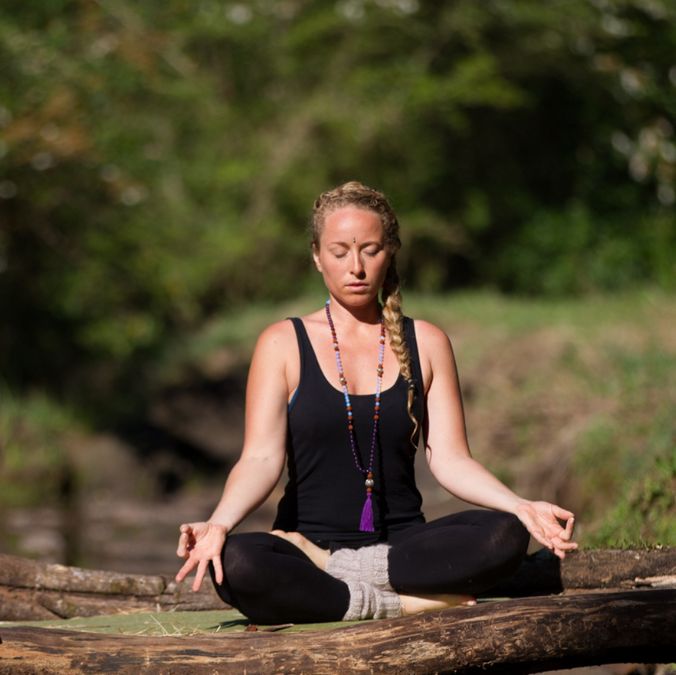

If you’ve ever tried to meditate and felt restless, distracted, or convinced you were doing it wrong, you’re not alone. Most people assume meditation is supposed to feel peaceful from the start and if it doesn’t, they decide they’re simply not a ‘meditation person.’
But meditation is not about perfection or stillness.
It’s about learning how to meet yourself differently, even if just for a moment.
Below is a simple, practical way to begin; whether you’re brand new or gently returning after some time away.
1. Start With 2 Minutes a Day (Here’s Exactly What to Do)
Two minutes is enough to create a shift in your nervous system and it removes the pressure that often stops people from starting at all.
Here’s a simple practice for complete beginners:
Step-by-step: Two-Minute Meditation
- Sit somewhere comfortable. Chair, bed, couch – whatever feels supportive.
- Place both feet on the ground or let your body settle naturally.
- Close your eyes or soften your gaze.No pressure either way.
- Take a slow inhale through your nose (count to 3 if that helps).
- Exhale gently through your mouth (aim for a count of 6).
- Begin noticing your breath.This simply means:
- feel the air entering your nose
- notice your chest or belly moving
- feel your body softening as you exhale
There is nothing else to do.
If your mind wanders-— which it will – just guide your attention back to the sensation of breathing.
This simple technique calms the body, steadies the mind, and becomes easier with repetition.
2. The Breath Is Your First Anchor
An anchor is the thing you return to/re-focus on whenever your mind drifts.
For beginners, the breath is the easiest and most reliable anchor because it is always happening in the present moment.
You can choose any part of the breath to anchor to:
- the cool air entering your nose
- the feeling of your belly expanding
- the warmth of the exhale
An anchor doesn’t stop your thoughts; it simply gives you a place to come back to whenever you notice you’ve drifted.
That “coming back” is the meditation.
3. What It Means to ‘Let a Thought Pass Through’
This phrase is often used but rarely explained well.
When a thought appears:
“What’s for dinner?”
“Did I reply to that message?”
“This is boring.”
“I’m not doing this right.”
…instead of fighting it or following it, try this:
Step 1: Notice that you’re thinking.
Step 2: Imagine the thought drifting past like a cloud, a bird, or a car driving by.
Step 3: Bring your attention back to your anchor (the breath).
You’re not pushing the thought away.
You’re not trying to solve it. And most importantly you aren’t scolding yourself for ‘having’ it.
You’re simply allowing it to come, allowing it to go, and returning to presence.
Again, the return is the practice.
4. Use Sound as a Support (Including Your Free 2-Hour Recording)
For many people, silence feels uncomfortable at first.
Sound gives your mind something gentle to follow, making it easier to stay present.
This can include:
- a singing bowl
- nature sounds
- a guided meditation
- a simple mantra
- a soundtrack designed for nervous system regulation
When people sign up to stay informed of events, training’s, and offerings, we send a free 2-hour Sound of Being™ recording.
This is a beautiful way to begin because you can choose how long or how little you listen for – 5 minutes, 20 minutes, or the full experience.
There is no right way to use it.
Let the sound hold you.
Let it guide your breath.
Let it make meditation feel effortless.
Sound has a way of settling the system without force — it naturally draws you into the present moment.
5. Choose Sensation Over Silence (Especially If You’re New)
If sitting in stillness feels overwhelming, try starting with sensation-based awareness.
Examples include:
- Feeling your feet on the floor
- Noticing the weight of your body settling
- Placing a hand on your chest and feeling the warmth
- Noticing the movement of your breath in your ribs
These small sensations anchor your attention in the body; exactly where meditation becomes easier and more natural.
6. Make Meditation Enjoyable, Not a Chore
The more pleasant the ritual, the more likely you are to continue.
Try:
- lighting a candle
- using essential oils
- sitting in morning sun
- playing soft sound
- wrapping yourself in a blanket
- meditating after a shower or before bed
Pleasure helps the practice stick.
Discipline is useful but it is gentleness that builds longevity.
7. You Don’t Have to Do It Every Day
Consistency matters, and ideally building to a daily consistent practice is most beneficial however it doesn’t need to be rigid.
Instead of saying, “I must meditate every day,” try:
“I’ll give myself two minutes of presence today.”
Meditation is a relationship. Some days you’ll feel deeply connected; other days you’ll feel distracted. Both experiences are valid and both are part of the practice.
Final Thoughts
You don’t need to be naturally calm, have a clear mind, or need perfect posture. You just need a sense of willingness and an open mind to create an experience that is different. If you start with two minutes and keep it simple, meditation becomes far more accessible, more nourishing, and more sustainable than you might expect.
Whenever you’re ready, your inner landscape is ready to meet you.
Yours in sound.
Matty Rainbow